The Power Core of Your RC Model: The Ultimate Guide to Batteries
In the world of radio-controlled models—whether it's a high-speed buggy, a wave-cutting speedboat, or a soaring model airplane—their performance hinges on one critical component: the battery. A high-performance, well-maintained battery is the key to unlocking your model's full potential. This guide will take you through everything you need to know about RC model batteries.
I.Battery Types: The Evolution from NiMH to LiPo
RC batteries have primarily evolved through two eras:
1.NiMH/NiCd Batteries:
These are the memories of "old-school" hobbyists. They are robust, tolerant of abuse, and don't require complex balance management.
Disadvantages: Low energy density, heavy weight, suffer from memory effect, and have significantly lower discharge capabilities compared to lithium batteries. Today, they are mostly found in entry-level or toy-grade models.
2.Lithium-Polymer (LiPo) Batteries:
- The undisputed mainstream champion today. Their ultra-high energy density and incredible discharge rates have revolutionized RC model performance.
- This guide will focus exclusively on LiPo batteries.
II.Decoding the Label: Your Battery's "ID Card"
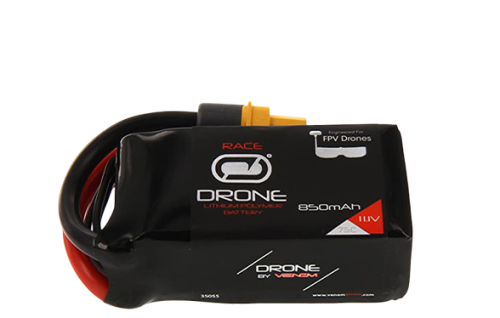
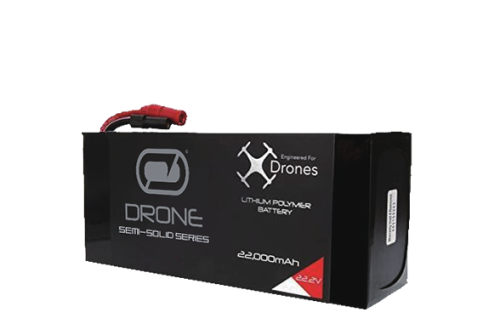
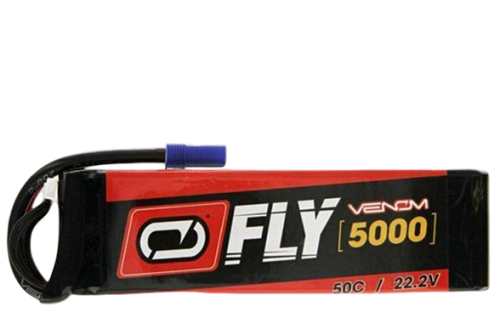
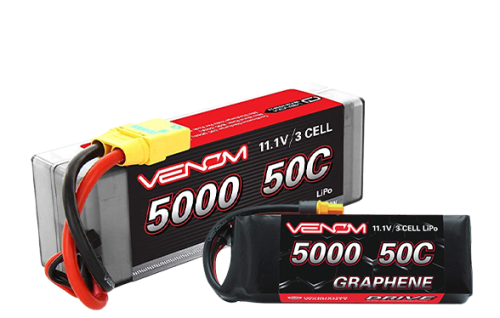
Look at a typical model battery, and you'll see a label like 7.4V 5000mAh 2S 50C. Here's what it means:
Voltage & Cell Count (S):
- A single LiPo cell has a nominal voltage of 3.7V. We connect them in series to increase voltage.
2S: Means 2 cells in Series. Total voltage is 3.7V * 2 = 7.4V. - 3S: 3 cells in series, 11.1V. Higher voltage generally means a higher motor RPM and a faster model.
Capacity (mAh): - 5000mAh (milliampere-hour): This is the "fuel tank" size. A higher capacity generally means longer run times, but also more weight and size.
Discharge Rating (C):
- This is one of the most critical performance indicators. The C rating indicates the safe continuous discharge rate.
- 50C: To calculate the max continuous current, use: Capacity (in Ah) × C Rating. For a 5000mAh (5Ah) battery, Max Current = 5Ah * 50 = 250 Amps.
- A higher C rating means the battery can deliver more instantaneous power. This is essential for high-torque applications like racing, crawling, or 3D aerobatics to prevent "voltage sag" and sluggish performance.
Charge Rating (C):
Some batteries are labeled, for example, 3C Charge. This indicates fast-charging capability. For a 5000mAh battery, 3C charging means you can charge at 15A, significantly reducing charge time.
Configuration (e.g., 2S2P):
- This means "2 series, 2 parallel," using 4 cells total. Series increases voltage; parallel increases capacity.
III. Battery Selection by Model Type
Different models have different battery priorities:
RC Cars/Trucks:
- Voltage: 2S or 3S are mainstream; speed runners use 4S, 6S, or higher.
- Size: The battery compartment size is a hard limit—always check before buying.
- Connector: High-current connectors like Deans (T-plug) or XT60 are standard. Ensure it matches your ESC.
- C Rating: For bashers and racers, 50C and above is recommended.
Model Aircraft:
- Voltage & Cell Count: Must be carefully matched to the motor's KV rating. 3S to 6S are common.
- Weight & Capacity: A precise balance between flight time and all-up weight is crucial. Overweight models fly poorly.
- C Rating: 30C-45C is often sufficient for fixed-wing planes; 3D helicopters need high C ratings (e.g., 45C+) for aggressive maneuvers.
RC Boats:
Waterproofing: The battery compartment is a humid environment. The boat's water-proofing and the battery's own seal are critical.
- C Rating: High-speed boats demand very high discharge rates.
- Placement: The battery's position affects the boat's center of gravity and trim.
III.Usage & Maintenance: Golden Rules for Longevity
LiPo batteries are precision instruments. Proper care extends their life and maintains performance.
1.Never Over-Discharge:
This is the #1 rule! Always set your ESC's Low-Voltage Cutoff (LVC) appropriately (e.g., 3.4V-3.6V per cell). Never run the battery until the model completely stops. A single deep discharge can ruin a battery.
2.Store at Storage Voltage:
If you won't use the battery for more than 2-3 days, discharge or charge it to 3.8V - 3.85V per cell (use the "Storage" mode on your charger). Storing batteries fully charged or fully depleted drastically shortens their lifespan and is a safety risk.
3.Use a Balanced Charger:
Always use a quality balance charger. It ensures each cell in the pack has the same voltage, which is fundamental for performance, longevity, and safety.
4.Mind the Temperature:
Charge Cool: Never charge a hot battery. Let it cool to room temperature first.
Pre-flight Warm-up: In cold weather, battery performance drops. Keep batteries warm before use.
5.Regular Inspection:
Before and after use, check for swelling, damage, worn wires, or loose connectors. If a battery is puffy or swollen, stop using it immediately and dispose of it properly. A swollen battery is a fire hazard.
IV.Safety First: Non-Negotiable Rules
LiPo batteries store a massive amount of energy. Mishandling can lead to fire.
- While Charging: Always charge on a non-flammable surface (e.g., concrete, tile) and never leave them unattended. A LiPo safety bag is highly recommended.
- While Transporting: Use a LiPo bag or case to prevent short circuits from the terminals touching metal objects.
- When Disposing: Do not throw in the regular trash. Fully discharge the battery (e.g., by soaking in salt water for several days) and take it to a designated battery recycling center.
Conclusion
Understanding how to select, use, and maintain your RC model battery is a essential skill. It's the key to unlocking peak performance and the foundation of safe hobbying. We hope this guide helps you get the most out of your powerful yet silent partner, ensuring every run is both thrilling and secure. Have fun, and stay safe.